

Delving into the intricate realm of modern business risk assessment, this piece sheds light on the pivotal role that AI plays in revolutionizing how risks are evaluated and managed. Brace yourself for a journey through the dynamic landscape of AI-powered risk assessment in today's business world.
As we navigate through the nuances of AI integration in risk assessment, a deeper understanding of its impact on businesses will unfold, unveiling the transformative power of this cutting-edge technology.
Overview of AI in Business Risk Assessment
AI has become a game-changer in modern business risk assessment, revolutionizing the way companies identify, analyze, and mitigate potential risks. By leveraging advanced algorithms and machine learning capabilities, AI technology has significantly transformed traditional risk assessment methods, making them more efficient, accurate, and proactive.
Examples of Industries Leveraging AI for Risk Assessment
- Finance: Banks and financial institutions use AI to analyze vast amounts of data in real-time to detect fraudulent activities and assess credit risks.
- Insurance: Insurance companies utilize AI to assess risks associated with policyholders, claims, and underwriting processes, improving decision-making and reducing losses.
- Healthcare: AI helps healthcare organizations identify potential risks in patient care, treatment outcomes, and operational processes, enabling better patient safety and quality of care.
- Retail: Retailers leverage AI to predict consumer behavior, optimize inventory management, and identify potential risks in supply chain operations, enhancing overall business performance.
Benefits of Using AI in Business Risk Assessment

Implementing AI in business risk assessment offers numerous advantages that can significantly improve the overall risk management process.
Enhanced Accuracy and Efficiency
AI technology can analyze vast amounts of data with speed and precision, leading to more accurate risk assessments compared to traditional methods. By automating the process, AI eliminates human error and bias, ensuring consistent and reliable results.
Predicting and Mitigating Risks
AI algorithms can identify patterns and trends within data sets to predict potential risks before they occur. This proactive approach allows businesses to take preventive measures and develop strategies to mitigate risks effectively. By leveraging AI, organizations can stay ahead of emerging threats and protect their operations.
Challenges and Limitations of AI in Business Risk Assessment
AI technology has revolutionized the way businesses approach risk assessment, providing advanced algorithms and predictive analytics to identify potential threats and opportunities. However, there are several challenges and limitations that organizations may face when implementing AI in their risk assessment processes.One common challenge is the quality of data used to train AI models.
Inaccurate or biased data can lead to flawed predictions and unreliable risk assessments. Additionally, the lack of transparency in AI algorithms can make it difficult for businesses to understand how decisions are being made, raising concerns about accountability and trust.Another limitation of AI technology in risk assessment is its ability to accurately assess complex risks.
While AI can process vast amounts of data at high speeds, it may struggle to account for unpredictable events or rare scenarios that fall outside the scope of its training data. This can result in oversights or misjudgments that could have significant consequences for a business.To address these challenges and maximize the benefits of AI in risk assessment, businesses can take several steps.
First, organizations should prioritize data quality and ensure that datasets used to train AI models are accurate, diverse, and free from bias. Transparency in AI algorithms should also be a key focus, with businesses implementing measures to explain how decisions are reached and ensure accountability.Furthermore, businesses can complement AI technology with human expertise to provide context and critical thinking in risk assessment processes.
By combining the analytical power of AI with human insight, organizations can enhance the accuracy and reliability of their risk assessments, ultimately making more informed decisions to mitigate potential risks and seize opportunities.
AI Tools and Technologies for Business Risk Assessment
AI tools and technologies play a crucial role in enhancing the accuracy and efficiency of business risk assessment processes. By leveraging advanced AI capabilities, businesses can identify potential risks, mitigate threats, and make informed decisions to safeguard their operations.
Popular AI Tools for Business Risk Assessment
- Machine Learning: Machine learning algorithms analyze historical data to identify patterns and predict future risks. These algorithms can detect anomalies and outliers that may indicate potential threats to the business.
- Natural Language Processing (NLP): NLP enables computers to understand and analyze human language, allowing businesses to extract valuable insights from unstructured data sources such as customer feedback, social media, and news articles.
- Predictive Analytics: Predictive analytics uses statistical algorithms and machine learning techniques to forecast future events based on historical data. By analyzing trends and patterns, businesses can anticipate risks and take proactive measures to mitigate them.
Comparison of AI Technologies in Risk Assessment
- Machine Learning vs. Natural Language Processing: While machine learning focuses on pattern recognition and predictive modeling, NLP specializes in text analysis and sentiment detection. Both technologies complement each other in risk assessment by providing a comprehensive view of potential threats.
- Predictive Analytics vs. Machine Learning: Predictive analytics is a subset of machine learning that focuses on making predictions based on historical data. Machine learning, on the other hand, encompasses a broader range of algorithms for classification, clustering, and regression tasks.
Examples of AI Tools in Business Risk Assessment
One example of successful AI application in business risk assessment is the use of machine learning algorithms to detect fraudulent transactions in financial institutions. These algorithms analyze transaction data in real-time to flag suspicious activities and prevent potential fraud.
Another example is the use of NLP to analyze customer feedback and sentiment on social media platforms. By monitoring customer conversations, businesses can identify emerging risks to their reputation and address them proactively.
Ethical Considerations in AI-Powered Risk Assessment
When businesses utilize AI for risk assessment, there are various ethical considerations that need to be taken into account to ensure fair and unbiased practices. It is crucial to examine the potential biases that AI algorithms may introduce in the risk assessment process and implement strategies to mitigate these risks.
Potential Biases in AI Algorithms
- AI algorithms can inherit biases from the data they are trained on, leading to discriminatory outcomes in risk assessment.
- Unintentional biases, such as racial or gender bias, can be perpetuated by AI systems if not properly addressed.
- Algorithmic biases may result in unfair treatment of certain individuals or groups, impacting the overall integrity of the risk assessment process.
Strategies for Ethical Risk Assessment with AI
- Implement diverse and inclusive training data to reduce biases in AI algorithms and promote fairness in risk assessment.
- Regularly audit and evaluate AI systems to identify and address any biases that may have been inadvertently introduced.
- Establish clear guidelines and ethical frameworks for the use of AI in risk assessment to ensure transparency and accountability.
- Encourage continuous education and awareness among stakeholders about the ethical implications of AI-powered risk assessment.
Final Review
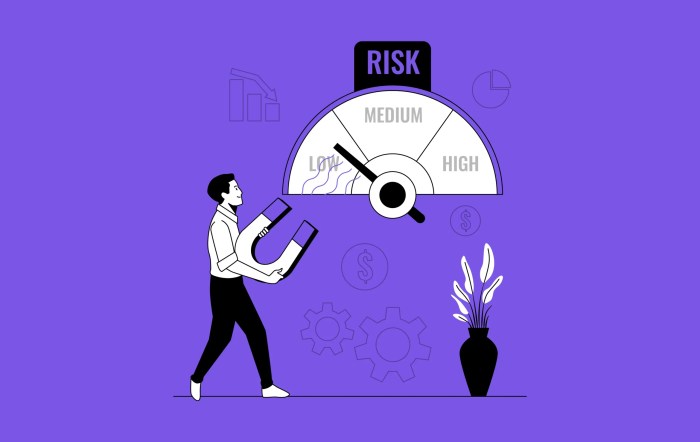
In conclusion, the exploration of AI in modern business risk assessment unveils a landscape teeming with opportunities for enhanced decision-making and risk mitigation. As businesses continue to embrace AI technologies, the future of risk assessment appears to be intertwined with the limitless possibilities AI has to offer.
Expert Answers
How can AI improve accuracy in risk assessment?
AI can enhance accuracy by processing vast amounts of data quickly and identifying patterns that humans might miss, leading to more informed risk assessment decisions.
What are some common challenges faced when implementing AI for risk assessment?
Common challenges include data privacy concerns, the need for quality data for training AI models, and ensuring the AI algorithms are transparent and explainable.
How can businesses ensure ethical risk assessment practices when utilizing AI?
Businesses can ensure ethical practices by regularly auditing AI systems for biases, promoting diversity in AI teams, and establishing clear guidelines for the ethical use of AI in risk assessment.

